


Materials and Care Instructions
–
Quality for life’s beautiful moment
More than fifty years ago, we fell in love with authentic materials that we craft primarily by hand. That hasn’t changed to this day. Of course, we also use state-of-the-art techniques - but only where they meaningfully complement our craftsmanship.
At our family-run workshop in Stephanskirchen, Upper Bavaria—nestled amid breathtaking natural beauty and an imposing mountain backdrop—we pursue our calling with enthusiasm and great care: we craft parasols that can last for generations and build furniture that transforms gardens and patios into living spaces.
Our love for wood has always been with us—perhaps because no other material possesses so much life. Combined with innovative, intelligent materials, this gives rise to the classics of tomorrow. We are certain that perfection arises only from passion. We have always kept this fire alive.
The Weishäupl Family
Care Instructions for Other Materials
Stainless Steel and Touch-Up Paint Pens
Wood Cleaner and Wood Brightener
Care Products and Application
Care Instructions
Parasol
Material Information
Even the highest-quality materials are subject to environmental influences and the natural aging process. Please follow the care instructions below to ensure you enjoy your Weishäupl parasol for many years to come.
The Wooden Parasol Frame
All wood used for our parasol frames is surface-treated with a protective impregnation.
Please check regularly that the parasol pole (in the base plate or ground socket) is not exposed to standing water. The wooden frames do not require any special maintenance to ensure their durability.
The Canopy
Material Properties
Our acrylic fabrics are made from premium solution-dyed acrylic fibers and are distinguished by their excellent color fastness, lightfastness, and weather resistance. They are treated to repel water and dirt. Acrylic fabrics are exposed to weather conditions and environmental influences such as dust, pollen, and bird droppings. Although the material is highly durable, prolonged exposure to dirt or moisture may affect the fabric. While the fabrics are not completely waterproof, they dry very quickly.
Slight color variations may occur during the finishing process of acrylic fabrics. Fabric samples may therefore differ slightly from later production batches.
Folded or heavily creased acrylic fabrics may develop so-called white crease marks—light-colored lines or brightened areas in the fabric caused by changes in the fiber structure. These are characteristic of the material and do not represent a quality defect.
Cleaning and Care
Routine Cleaning
Clean acrylic fabrics regularly with water, a soft brush, and a mild neutral soap to remove surface dirt. Avoid aggressive cleaning agents or pressure washers, as they may damage the fabric's protective finish and structure.
Heavy Soiling
For heavier soiling, removable cushion covers may be machine washed with a mild detergent at a maximum temperature of 30°C.
Storage
Store in a dry, well-ventilated place protected from direct sunlight. Ensure that all fabrics are completely dry before storage to prevent mold or mildew from forming.
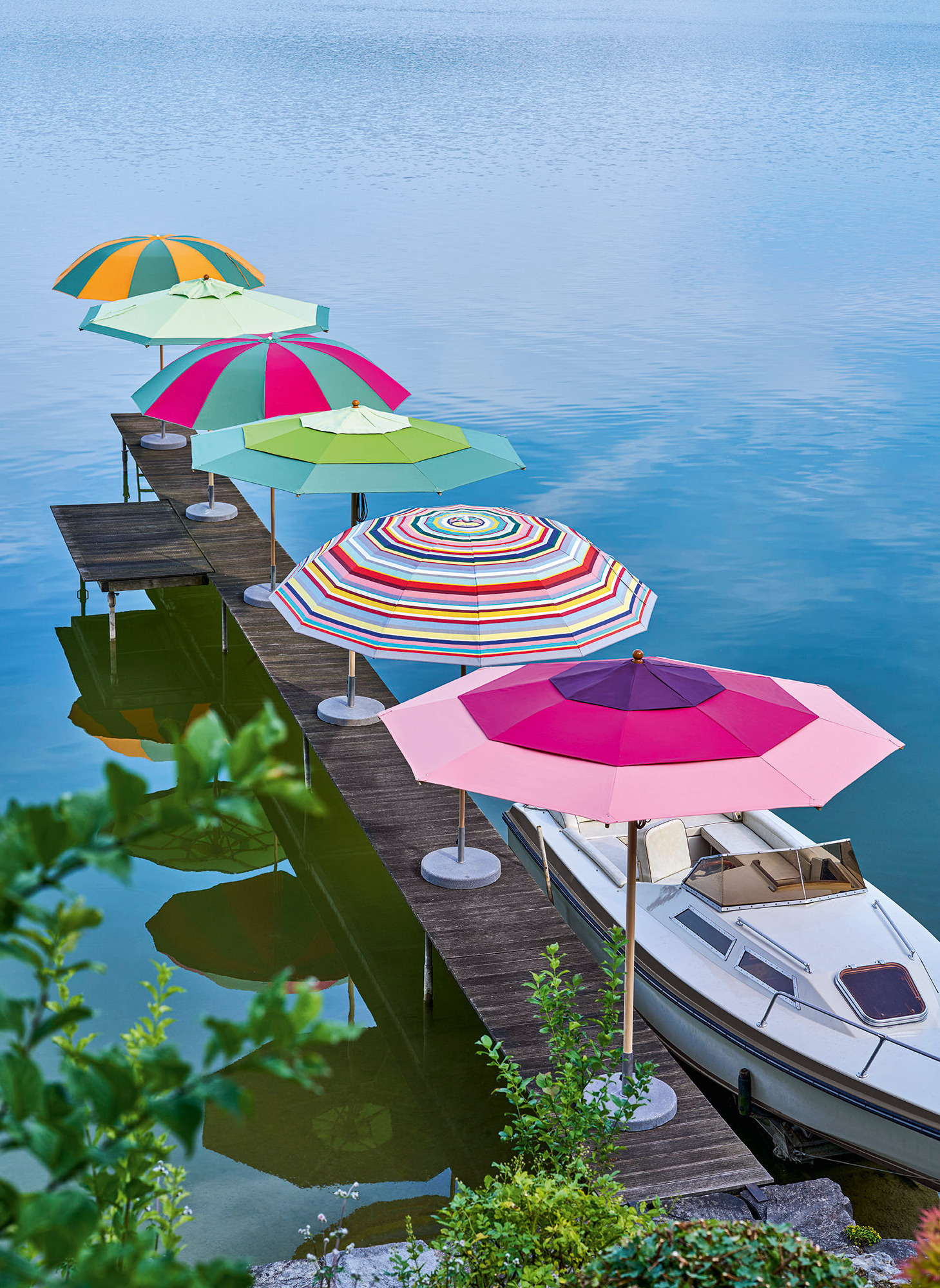
Parasol
Storage
Our parasols should be stored over the winter in a dry condition, ideally protected with one of our protective covers and kept in a sheltered, dry location. Important: Always store the parasol in an upright or slightly inclined position. Otherwise, there is a risk of damage caused by rodents. Please note that abrasion marks and holes are not covered by warranty.
Protective Cover
We recommend covering your parasol with one of our protective covers whenever it is not in use. Please ensure that the canopy is completely dry before covering it. If you have to close the parasol while it is damp or wet, it should be reopened and allowed to dry as soon as possible to prevent mold, mildew, or material deterioration.
Service
If your parasol should require minor repairs over time, we will be happy to assist through our repair service. Individual parasol components and replacement canopies can be ordered through our authorized dealers. Professional cleaning of your canopy is also available through our dealers or directly from us at any time. Our dedicated After Sales Team is always happy to assist you: service@weishaeupl.de
Teak Furniture
Properties of the Wood
Wood is a naturally grown material. It is authentic and, when left to age naturally, develops a uniquely beautiful character over time. Wood appeals to the senses and has a vibrant, living feel—qualities we truly appreciate. Depending on the species, each type of wood differs in color, grain, and characteristics. Its growth pattern, age, and the location where it was grown all contribute to its individual appearance. As a natural material, wood responds to changes in temperature, humidity, and dry conditions. It expands, contracts, and may develop small cracks—a natural process often described as wood "working." We think this is part of its beauty. None of these characteristics affect its functionality. On the contrary, every table, bench, and stool becomes a unique piece with its own individual character—made to accompany you for many years, and perhaps even for generations.
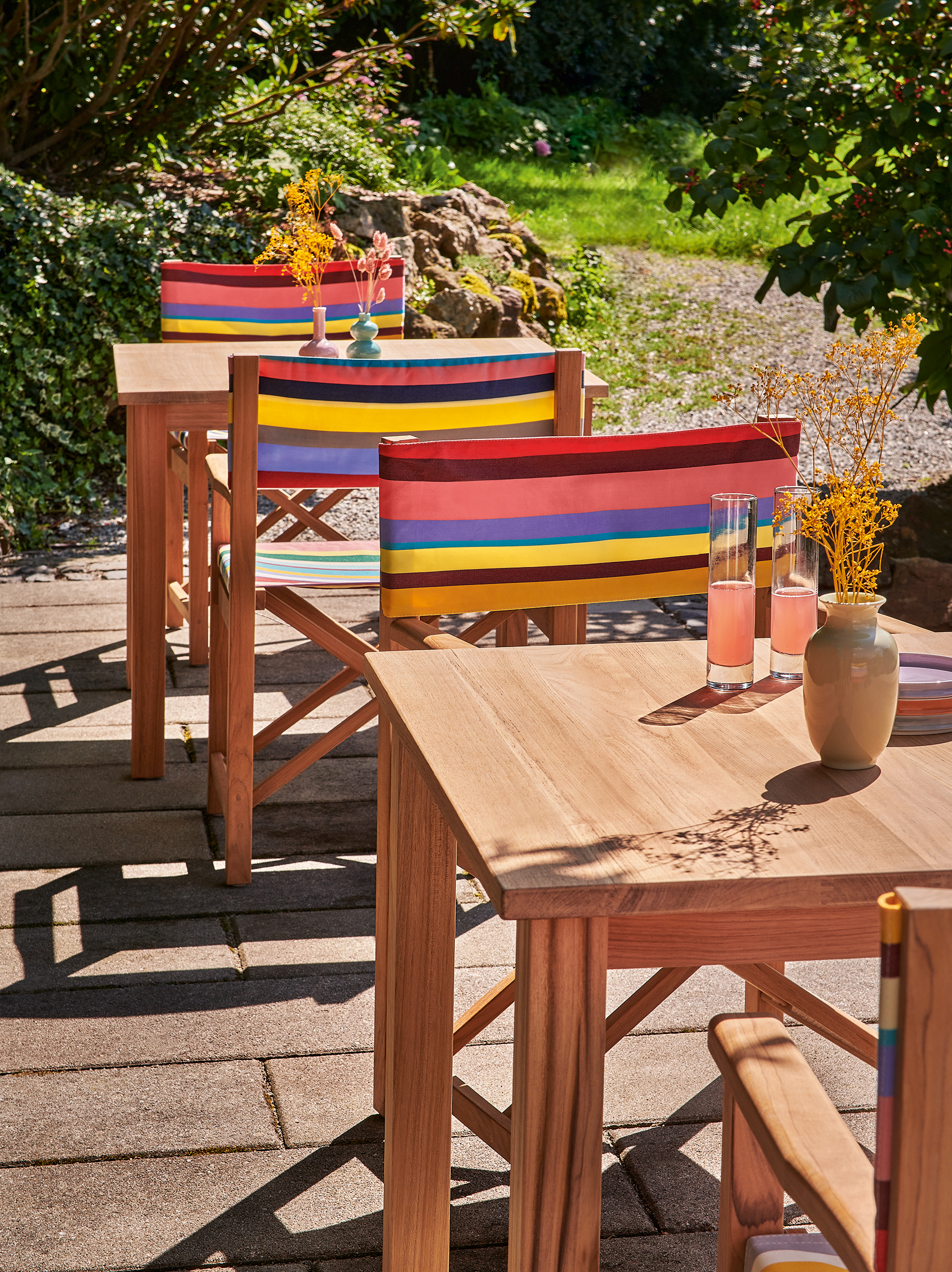
Teak as a Material
Teak has been used as a construction material for centuries and is still the preferred choice for ship decks today. It is easy to see why: teak naturally contains silica, waxes, and oils. As a result, it absorbs very little moisture, withstands temperature fluctuations, and shows minimal movement when exposed to changing weather conditions. It is also naturally resistant to mold and pests. For these reasons, we use teak for many of our outdoor furniture collections and parasols. The slats of our tabletops are finger-jointed and bonded with waterproof adhesive, providing additional strength and durability.
Nevertheless, teak remains a living material, and natural changes over time cannot be avoided. Like all wood, teak continues to respond to its environment—especially outdoors. When exposed to the elements, it gradually develops its characteristic silver-grey patina, a look familiar from traditional solid-wood buildings and highly valued by many garden enthusiasts. Natural variations in color, grain, and small cracks are characteristic features of the material and are not considered defects.
The first exposure to moisture causes the surface fibers of any wood, including teak, to swell slightly. As the wood dries, these fibers rise, creating a slightly rough surface. For this reason, we offer a premium care kit specifically designed for teak. The included sanding fleece easily smooths rough areas with minimal effort. Always sand in the direction of the wood grain when the surface is dry, then remove the sanding dust with a damp cloth. Repeat this process whenever necessary.
Before First Use
Although all wooden surfaces are cleaned before delivery, we recommend wiping them with a damp cloth before first use. Fine teak dust may adhere to clothing but can easily be removed by shaking out the fabric or through normal washing. When mixed with water, for example rain, teak dust may cause stains on textiles. These stains can usually be removed by washing the affected fabric with water, such as in a washing machine.
Teak Furniture
Care Instructions
Water Marks
Thoroughly moisten the entire tabletop with water and spread it evenly using a soft brush or cloth. Then wipe the tabletop dry with a clean, dry cloth and allow it to air dry completely.
Teak Wood and Rain
After the first rain showers, the wood may no longer feel as smooth as before. This is because fine wood fibers naturally rise, creating a slightly rough surface. This is a normal characteristic of the material and does not affect its quality or performance. These fibers can easily be removed using our sanding fleece. When the wood is completely dry, gently sand several times in the direction of the grain. Afterwards, wipe away the resulting teak dust with a damp cloth. Repeat this process whenever necessary.
Drying Wet Furniture Sling Fabrics
For our Ahoi, Cabin, and Loft furniture collections, we recommend tilting the chairs and leaning them against the table. Storing them at an angle allows the sling fabric to dry more quickly.
Teak Furniture
Storage
To prevent standing moisture and the formation of mildew stains, please observe the following recommendations: furniture should always be completely dry before storage, must not be stored in damp rooms, and should be covered with a breathable protective fabric rather than plastic sheeting.
Furniture Covers
Our furniture is built to stand the test of time—not only because it is crafted with the utmost care in our workshops, but also because we select naturally weather-resistant woods and materials. Nevertheless, we recommend protecting your furniture during the winter months or long-term storage with our custom furniture covers, available for all of our collections. They are intentionally designed with a slightly generous fit to ensure good ventilation and easy handling. Drawstrings with cord locks keep the covers securely in place.
The covers are made from an elastic, breathable, and water-repellent beige PU membrane fabric that allows moisture to escape easily. For tables, we also recommend using spacers so the cover does not rest directly on the tabletop over a large area. This improves air circulation and helps prevent mold growth. Even so, especially after extended periods of rain, we recommend removing the cover occasionally to allow the furniture to air out. If tables will not be used for an extended period, slightly raise one side so they are stored at a slight angle. This allows rainwater to drain away and prevents standing water.
All furniture covers can be machine washed at 40°C on a gentle cycle using a mild detergent and spun at a low speed. Please do not iron the covers. Instead, hang them on a washing line to air dry.
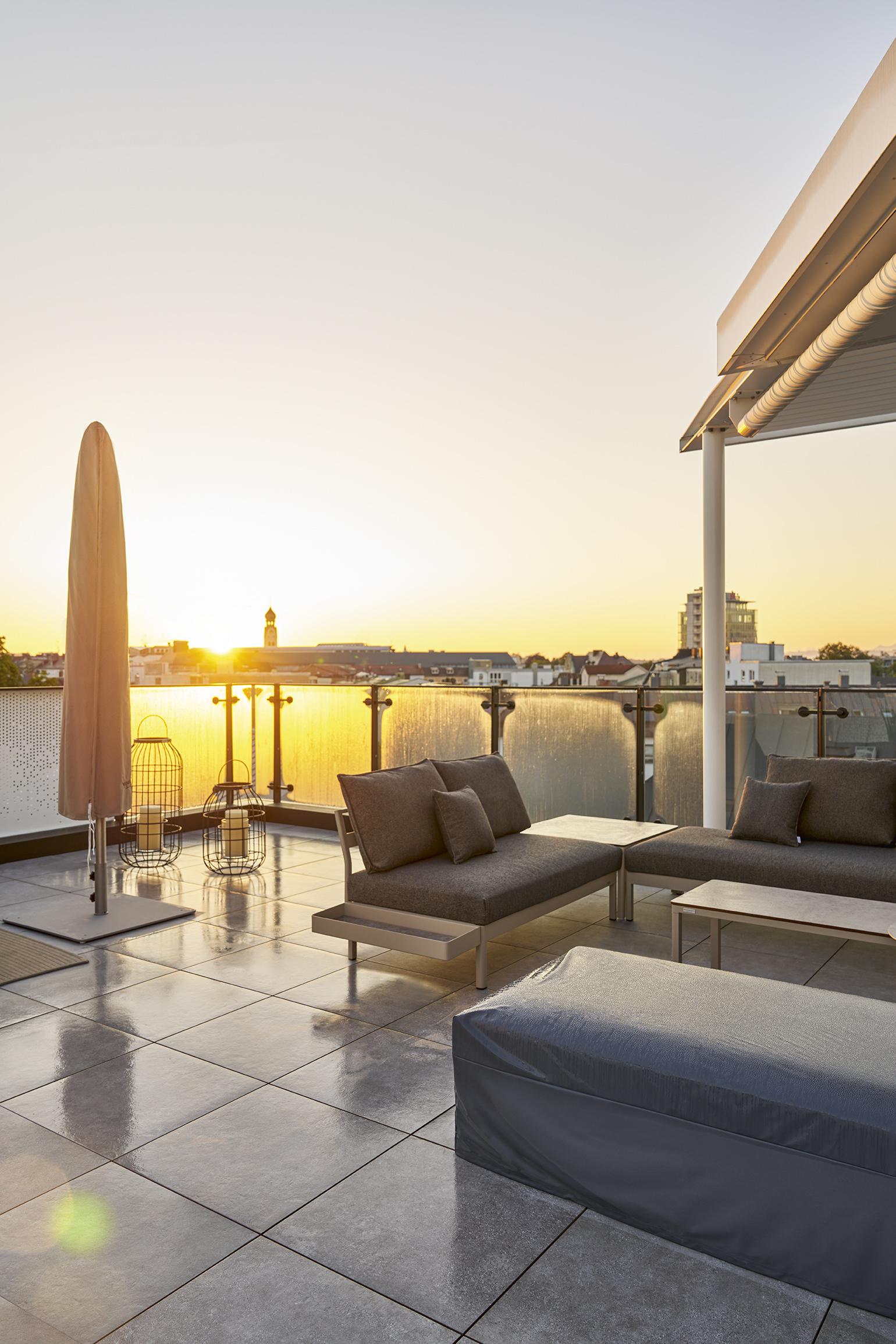
Powder-Coated Surfaces
Material Properties
Our powder-coated metal furniture features a high-quality surface finish designed to provide long-lasting durability for both indoor and outdoor use. The powder coating protects against corrosion while giving the furniture a refined, pleasant feel.
During everyday use, as well as when stacking or moving the furniture, minor signs of wear may appear on the powder-coated surface. These are characteristic of the material and do not constitute a quality defect. Such marks cannot be completely avoided during normal use, but careful handling will help keep them to a minimum.
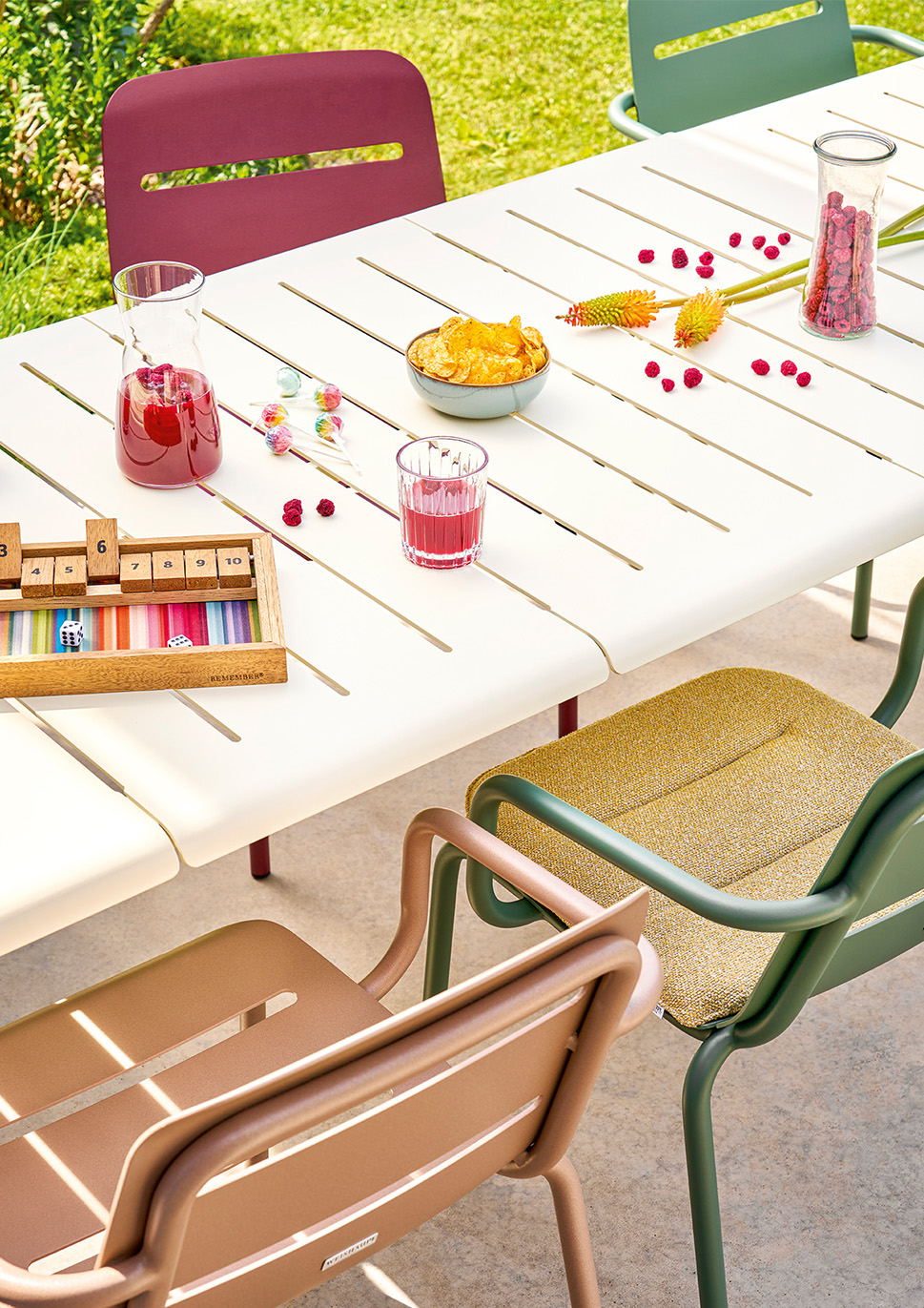
Powder-Coated Surfaces
Cleaning and Care
Use a soft sponge or cloth together with a mild neutral soap for cleaning. We recommend using our Powder Coating Care Fluid. Afterwards, rinse thoroughly with clean water and dry the surface carefully to prevent limescale marks.
Avoiding Damage
Do not use abrasive or acidic cleaning agents, hard brushes, or pressure washers, as these may damage the powder-coated finish.
Repairing Scratches: Minor damage to the coating should be repaired promptly using a suitable touch-up paint pen to prevent corrosion and further chipping.
Winter Storage
We recommend storing the furniture during the winter months in a dry, well-ventilated location. If this is not possible, use our breathable protective covers to shield the furniture from the elements.
Preventing Standing Water
Store tables at a slight angle so that rainwater can drain away, and lean chairs against the table when not in use to prevent water from collecting on the surfaces.
Other Materials
Care Instructions
Weishäupl furniture and parasols are crafted exclusively from premium-quality materials. They are designed to withstand summer and winter, rain and snow alike. Nevertheless, exposure to the elements naturally leaves its mark over time. To keep your furniture looking its best for many years, we recommend regular care and maintenance.
Stainless Steel
Material Properties
Our stainless steel products are manufactured from high-quality AISI 304 stainless steel. For use in particularly corrosive environments—such as coastal areas, regions with high humidity, or locations near swimming pools—we recommend regular maintenance to protect the surface from tea staining, salt deposits, and pitting corrosion. Surface rust on stainless steel is not a material defect but results from environmental influences. Regular cleaning helps prevent further corrosion while preserving both the appearance and quality of the material.
Cleaning and Care
Remove dust, dirt, salt, or chlorine deposits with clean water and a soft cloth. For heavier soiling, use a mild, non-abrasive stainless steel cleaner.
In coastal areas, regular rinsing with fresh tap water is also recommended.
Recommended Cleaning Frequency
| Environment | Cleaning Frequency |
| Standard (Outdoor Use) | 3–4 times per year |
| Corrosive Environment | Monthly |
Touch-Up Paint Pens
Another key component of our furniture is the use of high-strength alloyed strip and round steel. Although these frames are protected by multiple surface treatments—including galvanization, sealing, and baked-on powder coating—damage or heavy wear at exposed areas may eventually lead to rust formation. We offer touch-up paint pens in all frame colors, allowing minor damage and rust spots to be repaired easily. We also recommend lubricating the zinc bushings in the joints with a drop of oil once or twice a year.
Hard Oil and Hard Wax
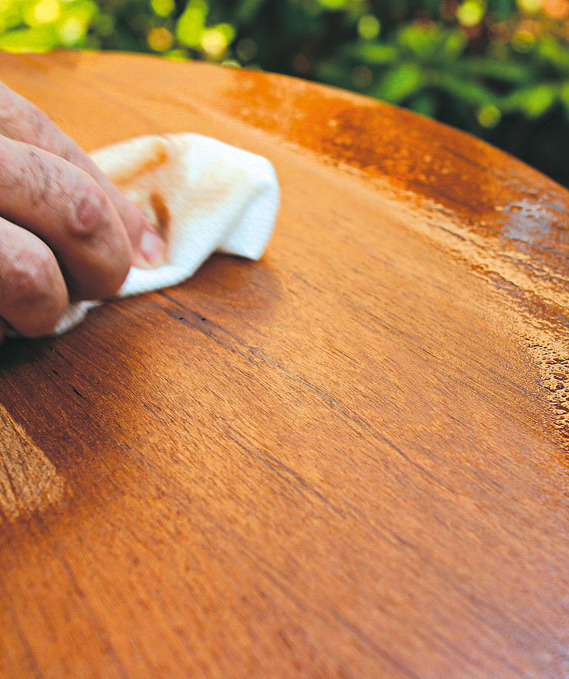
The woods we use do not generally require surface treatment to ensure their durability. However, for tabletops we recommend treating the surface with hard oil (applying it to both the top and underside of the tabletop) to enhance their appearance. This treatment protects the wood and helps prevent food residues—especially grease and strongly pigmented liquids—from penetrating the surface. Nevertheless, any stains should always be removed as quickly as possible.
Treating our furniture with oil is ultimately a matter of personal preference. Oiling significantly enriches the natural color of the wood, giving it a darker, slightly warmer, reddish tone. Please note that only certain oils are suitable for outdoor wooden furniture. We recommend a natural hard oil, such as linseed oil, which is included in our care kit. For indoor furniture, we also offer hard wax in addition to hard oil.
Important Information
Not every wood care product available from specialist retailers is suitable for the types of wood we use outdoors. Unsuitable products may contain additives that can encourage mold or fungal growth, often as a result of sealing the wood surface too heavily. Wooden surfaces should also not be treated too frequently, as excessive applications can clog the wood's fine pores and prevent it from breathing properly. This may lead to the formation of mildew stains.
Wood Cleaner and Wood Brightener
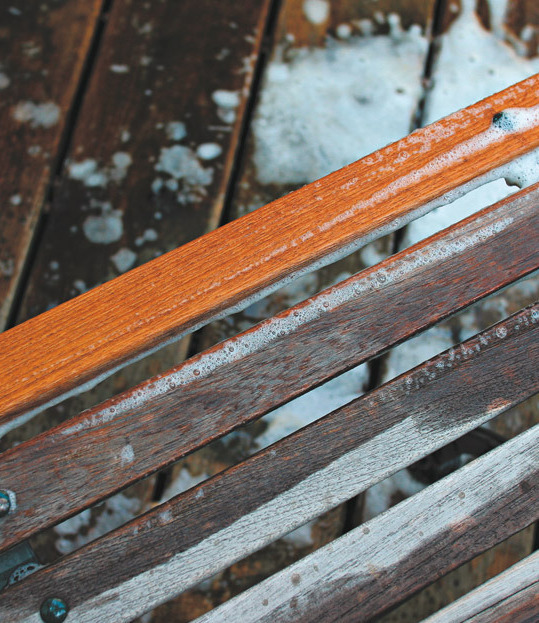
Teak is naturally one of the most suitable woods for outdoor use. Surface contamination caused by environmental influences, such as pollen or soot, can usually be removed with water, a soft brush, and a mild neutral soap. We recommend our Wood Cleaner Kit, specially developed to effectively remove even stubborn dirt.
Our Wood Brightener Kit restores the original appearance of heavily weathered, greyed, moss-covered, and untreated wood. The cleaning process is based on a gentle "peeling effect," similar to methods used in skincare. Natural fruit acids—without harsh chemicals—loosen dirt and UV-damaged wood particles from the surface, allowing them to be rinsed away with water. This reveals wood that closely resembles its original natural color and appearance. Healthy wood is not affected by this treatment. After the surface has dried, we recommend smoothing it with our sanding fleece and, if desired, treating it with hard oil.
Oil/Wax Remover
The Oil/Wax Remover Kit is designed for the deep cleaning of previously oiled or waxed wooden surfaces. This two-component system, consisting of Pre-Cleaner A and Deep Cleaner B, removes existing oil and wax finishes in two simple steps while restoring the wood's original natural character. We recommend using this system when previously applied oil or wax coatings are only partially intact and residual finishes need to be removed, or whenever a thorough cleaning is required before applying a new treatment. Detailed application instructions are included with the Oil/Wax Remover Kit.
Textile Weaves
The Denia and Slope textile weaves require no special maintenance. Dirt and dust can easily be removed with a soft brush, a cloth, or a damp sponge.
Basket, Rug and Pouf
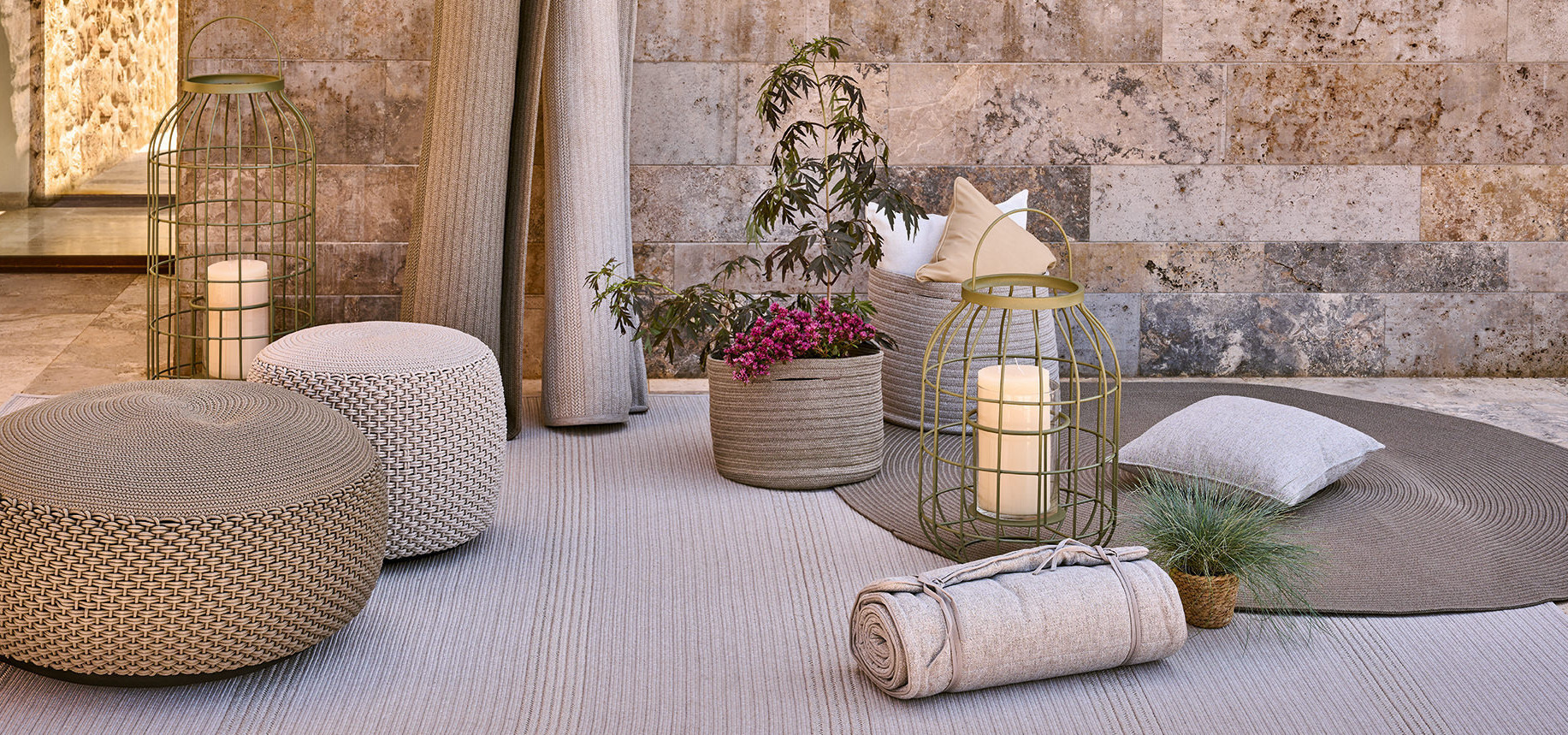
Vacuum or brush the product regularly to remove dust and dirt and keep the surface in good condition. Most stains can be removed easily if treated promptly. When not in use, store the product in a dry place and keep it covered. Stitched rugs should always be rolled with the seam facing inward to protect the stitching. Regular vacuuming or gentle brushing helps prevent dirt build-up and extends the product\'s service life.
Surfaces
Our polished granite tabletops are treated with a special stain protection that repels oil, grease, limescale, and water. This impregnation significantly reduces the surface\'s susceptibility to staining and makes cleaning easier. Nevertheless, acidic liquids such as lemon juice or vinegar should be removed immediately, as they may etch the stone surface.
For routine care, we recommend using a standard granite cleaner or a natural stone care product. Please do not use cleaning agents containing surfactants or acids, as they may reduce the effectiveness of the protective treatment and cause surface etching. Light soiling can easily be removed with a soft, damp cloth. For heavier soiling, use a mild soap solution (neutral soap).
HPL and Ceramic surfaces require no special maintenance thanks to their highly durable finish. Light dirt can be removed using a soft, clean cloth or a soft damp sponge. Heavier soiling can be cleaned with a mild soap solution (neutral soap). Only cleaning products that are free from abrasive, highly acidic, or strongly bleaching ingredients should be used, as these may damage or scratch the surface.
All Materials
Care Products and Application
| Material | Application | Care Product | Care Instructions |
| Teak | Indoor / Outdoor | Neutral Soap | Soak the wood with water and neutral soap, clean using a scrubbing sponge or soft brush, then rinse thoroughly with clean water. |
| Hard Oil | Apply undiluted in a very thin coat, then wipe the treated surface to remove any excess oil. | ||
| Hard Wax (Indoor Use Only) | Apply a very thin layer with a cloth. Allow to dry for approximately 12–24 hours, then polish. Additional applications may be carried out if required. | ||
| Wood Brightener | Apply with a brush, scrub with a soft brush or scouring pad, then rinse thoroughly with water. | ||
| Oil / Wax Remover | Apply Pre-Cleaner "A" undiluted using a brush and work it into the surface. While still wet, apply Deep Cleaner "B" with a brush. Once the desired appearance has been achieved, rinse thoroughly with plenty of water immediately (do not allow the product to dry). | ||
| Powder-Coated Steel Frames | Indoor / Outdoor | Lubricating Oil for Hinges | Depending on use, especially outdoors, lubricate hinge points with one drop of oil. |
| Original Touch-Up Paint | Lightly sand areas with paint damage caused by normal use, then repair them using the touch-up paint. | ||
| Stainless Steel | Indoor / Outdoor | Household Stainless Steel Cleaner | – |
| Aluminum | Indoor / Outdoor | Original Touch-Up Paint | Lightly sand areas with paint damage caused by normal use, then repair them using the touch-up paint. |
| Granite | Indoor / Outdoor | Natural Stone Cleaner Natural Stone Care Cleaner | – – |
| HPL & Ceramic | Indoor / Outdoor | – | Remove light soiling with a damp cloth. For heavier soiling, use a mild solution of neutral soap. |
Click here to view our complete range of cleaning and care products. Back to Top
All Materials
Cleaning
Teak Wood
Surface contamination caused by environmental influences (such as pollen, soot, and similar deposits) can be effectively removed using our care products. Moisten the teak surface with water. Apply a concentrated solution of neutral soap to a cleaning sponge. Allow it to soak briefly, then clean the wood with a brush or scouring sponge, always working in the direction of the wood grain. Afterwards, rinse thoroughly with clean water. Depending on the level of soiling, this process may be repeated. Once the surface has dried, smooth any slightly raised wood fibers with our sanding fleece and, if desired, treat the wood with our hard oil.
Cushions and Accessories
For normal everyday soiling, we recommend cleaning cushions and accessories thoroughly with warm water, mild neutral soap, and a medium-soft brush. In the case of heavier soiling, cushion covers and accessories may be professionally dry-cleaned or machine washed at a maximum temperature of 30°C using a mild detergent. Please do not use fabric softener under any circumstances. Fabrics, cushions, and covers should not be tumble dried or ironed. Instead, reshape them while still damp and allow them to dry flat.
Important: Always remove the cushion insert before washing. (Exception: cushions with foam cores wrapped in fleece, where the insert cannot be removed.)
Furniture Sling Fabrics
The fabric slings used in our AHOI, CABIN, and LOFT furniture collections can be cleaned as described above. Drying the fabric while it is under tension to prevent shrinkage is not necessary, as the material naturally returns to its original shape during normal use.
Parasol Canopy
Leaves, bird droppings, and insect residue should be removed as soon as possible. For normal everyday soiling, we recommend brushing the canopy with a soft, dry brush. More stubborn stains are best treated while the canopy is open, using lukewarm water and a medium-soft brush. Ideally, clean the fabric while it is already damp, as moisture softens the dirt and makes it easier to remove. If necessary, use only a mild neutral soap to improve the cleaning result, then rinse thoroughly with clean water. We also recommend reapplying a commercially available waterproofing spray (such as those available from camping supply retailers) after cleaning.
Professional textile cleaning services can clean and reproof your canopy. When using such a service, please specifically request reproofing after cleaning. Please note that organic stains such as bird droppings, moss, or mildew stains cannot always be removed completely, even by professional cleaning.
Cleaning Notes for Parasol Canopies
- All cleaning methods involving detergents reduce the effectiveness of the fabric's original treatment, including its mildew-resistant, water-repellent, and dirt-repellent properties.
- Reproofing the fabric after cleaning is therefore recommended. However, the original factory finish cannot be fully restored.
- Mildew stains can only be removed using treatments specifically designed for this purpose.
Furniture Sling Fabrics
The fabric slings used in our AHOI, CABIN, and LOFT furniture collections can be cleaned as described above. Drying the fabric while under tension to prevent shrinkage is not necessary, as it will naturally return to its original shape through normal use.
Parasol Canopy
Leaves, bird droppings, and insect residue should be removed as soon as possible. For normal everyday soiling, we recommend brushing the canopy with a soft, dry brush. More stubborn stains are best treated while the canopy is open, using lukewarm water and a medium-soft brush. Ideally, clean the fabric while it is already damp, as this softens the dirt and makes it easier to remove. If necessary, use only a mild neutral soap to improve the cleaning result, then rinse thoroughly with clean water. We recommend reproofing the canopy with a commercially available waterproofing spray (available, for example, from camping supply retailers).
Professional textile cleaning services can clean and reproof your canopy. When using such a service, please specifically request that the canopy be reproofed after cleaning. Please note that organic stains such as bird droppings, moss, or mildew stains cannot always be removed completely, even by professional cleaning.
Cleaning Notes for the Parasol Canopy
- Any cleaning method that uses detergents will reduce the effectiveness of the fabric's original finish, including its mildew-resistant, water-repellent, and dirt-repellent properties.
- We therefore recommend reproofing the fabric after cleaning. However, the performance of the original factory finish cannot be fully restored.
- Mildew stains can only be removed using treatments specifically designed for this purpose.
Denia and Slope Textile Weaves
Dirt on the seat and backrest weave can be cleaned using warm water or a mild soap solution (neutral soap) together with a soft brush. We recommend soaking the surface beforehand. To avoid discoloration, do not use chemical cleaning agents. We strongly advise against using a pressure washer. Occasionally rinsing the weave with a garden hose is sufficient to remove dust and plant residue.
Basket, Rug, Pouf
Most stains can be removed easily if treated promptly. When necessary, clean the product using a pressure washer from a minimum distance of 30 cm together with a mild soap solution, then allow it to air dry. Choose your brush carefully: Avoid aggressive brushes or harsh cleaning agents, as they may cause damage such as cracks or discoloration.
- Non-greasy stains: Clean the stain using a mixture of hot water and half a spoonful of detergent. Dab gently from the outside toward the center of the stain without rubbing. Afterwards, rinse thoroughly with clean water.
- Avoid stain removers: Do not use stain-removing products. If a chlorine-based cleaner is used, rinse thoroughly with clean water afterwards and avoid direct sunlight while the product is drying.
- Grease and oil stains: First remove these stains with acetone, then treat the affected area as you would a water-soluble stain.
Batyline® Fabric
Dirt can be removed using warm water or a mild soap solution (neutral soap) together with a medium-soft brush. As with our other textile materials, we recommend soaking the fabric beforehand. To prevent discoloration, do not use chemical cleaning agents. We also strongly advise against using a pressure washer. Occasionally rinsing the fabric with a garden hose is sufficient to remove dust and plant residue.